Over the last three months, WLR&A has attended three water sector events that, on paper, couldn’t look more different.
One was a technical training event in northern Italy. One was national Italian utilities showcase. One was a focused, UK-specific event on leakage and metering hosted by a single water company. For all three, the same underlying question, which WLR&A keeps returning to in our own work, was: does the Leakage Management sector actually have defensible data and robust concepts to analyse that data? Is the technology getting ahead of the validity of the analysis?
This piece is our attempt to pull our experience of these three events into one conversation, and to flag a handful of technologies we think are worth watching.
Brescia: the technical deep-dive
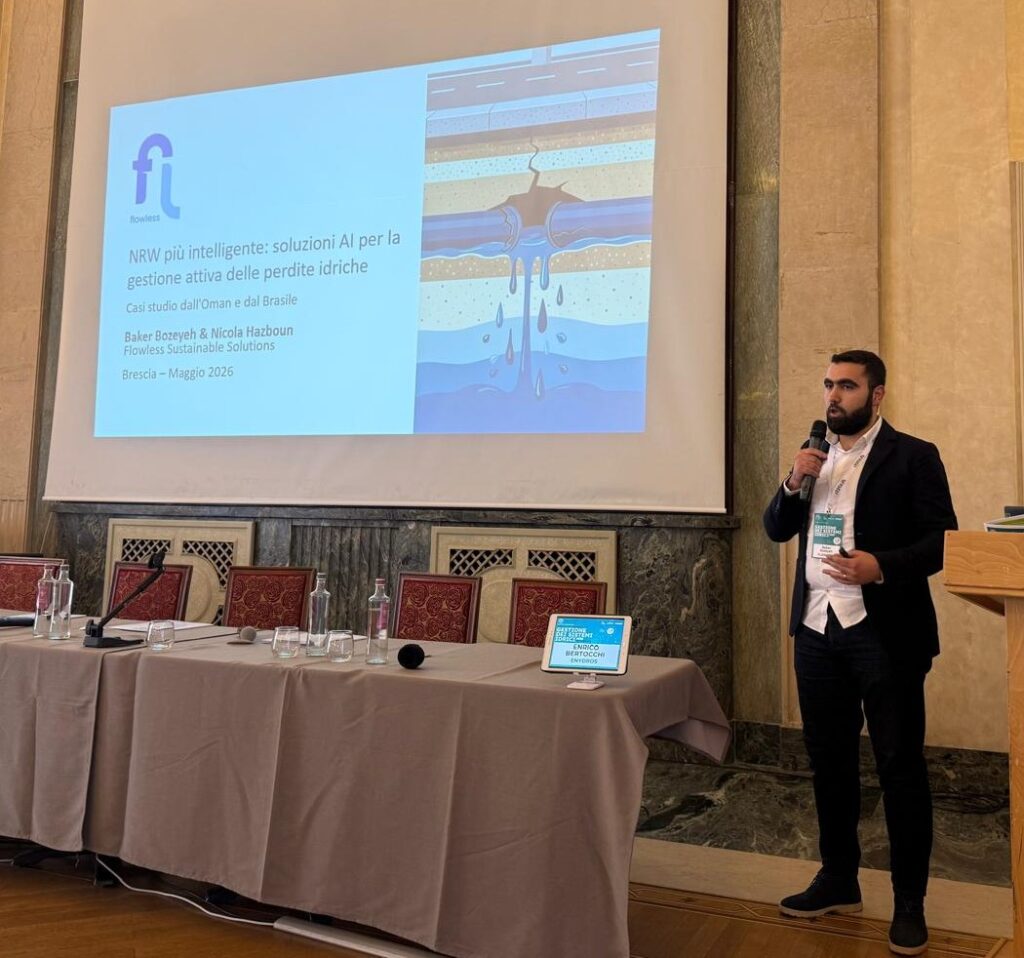
The Scuola di Alta Formazione sulla Gestione dei Sistemi Idrici, held in Brescia in May 2026, was organised by ISLE Italy and hosted by Marco Fantozzi — a fitting host, given his more than three decades working on non-revenue water programmes around the world. The focus was on progress against Italy’s PNRR-funded water projects – real interventions, real deadlines, and a room full of people who are actually implementing them, not just planning them – with additional sessions on digital innovation technologies
Allan Lambert gave the keynote: thirty years of pressure management from an international perspective, tracing how the discipline has evolved and where international and UK practice have — and haven’t — kept pace with each other.
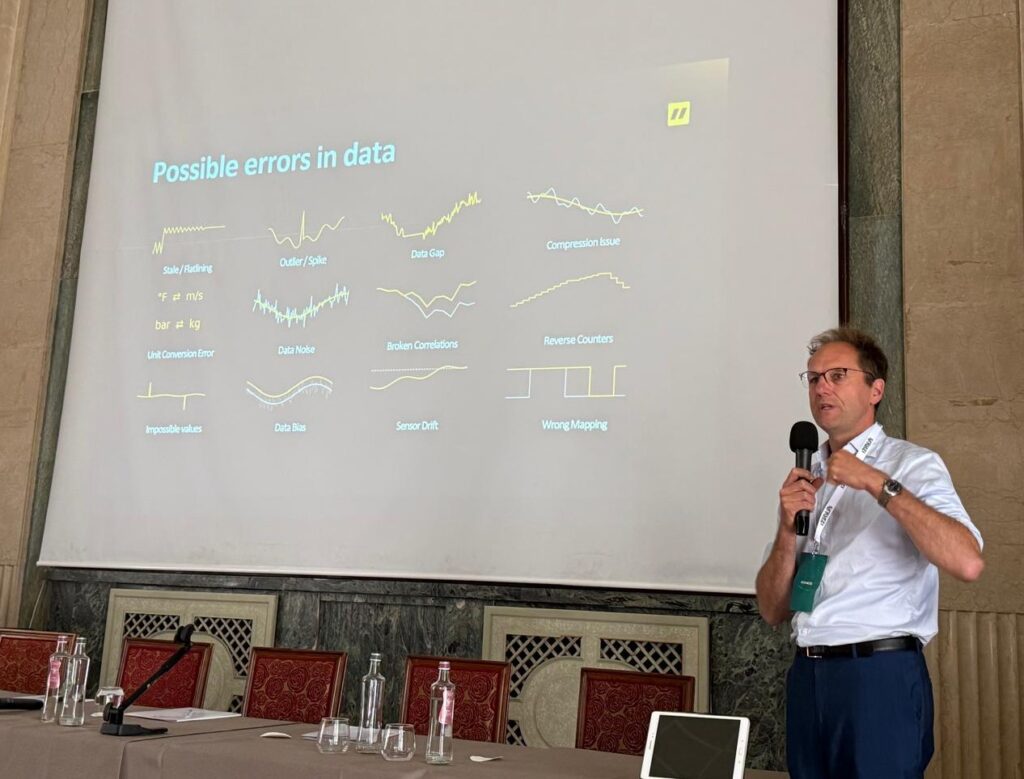
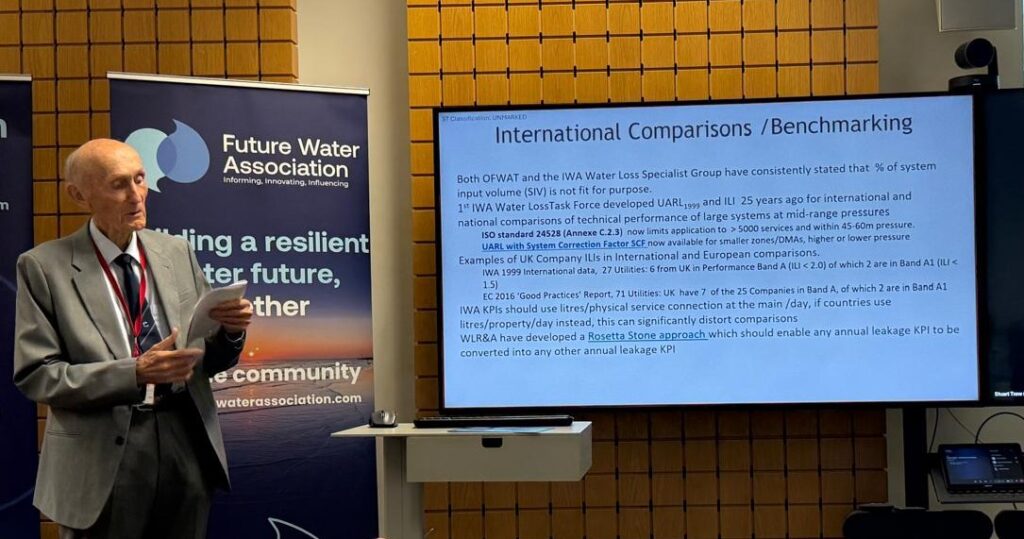
Kate Stanton-Davies presented on the inter-relationships between real loss KPIs, including a “Rosetta Stone” approach to translating between the different real losses KPIs. She made the case that there should be greater transparency between KPIs, with underlying data being quality controlled to identify commonly occurring errors and with analysis methods that are defensible when subject to close inspection.
That theme found strong reinforcement in the technology on show. Flowless’s WaterCloud platform, which we find particularly compelling, is a comprehensive non-revenue water platform rather than a narrow analytics layer: data validation and quality assessment, loss component analysis and leak detection, and water balance and KPI reporting, all within one system. Every component carries its own confidence range — so a utility sees not just its NRW figure, but how much weight that figure can actually bear. Given what Allan and Kate had both just argued from the stage, this felt like the same principle built directly into the tooling. Sitting on top of it is Octopo, an agentic AI layer that turns that analysis into action, answering plain-language operational questions — “how can I reduce leaks in zone 1”, “help me understand ILI” — without pretending to replace the engineer’s judgement underneath.
Also on the programme was Timeseer.ai, presenting on data validation for time series data — a topic that maybe gets neglected, but which should be close to the top of Utility and Regulator agendas.

Florence: the national showcase
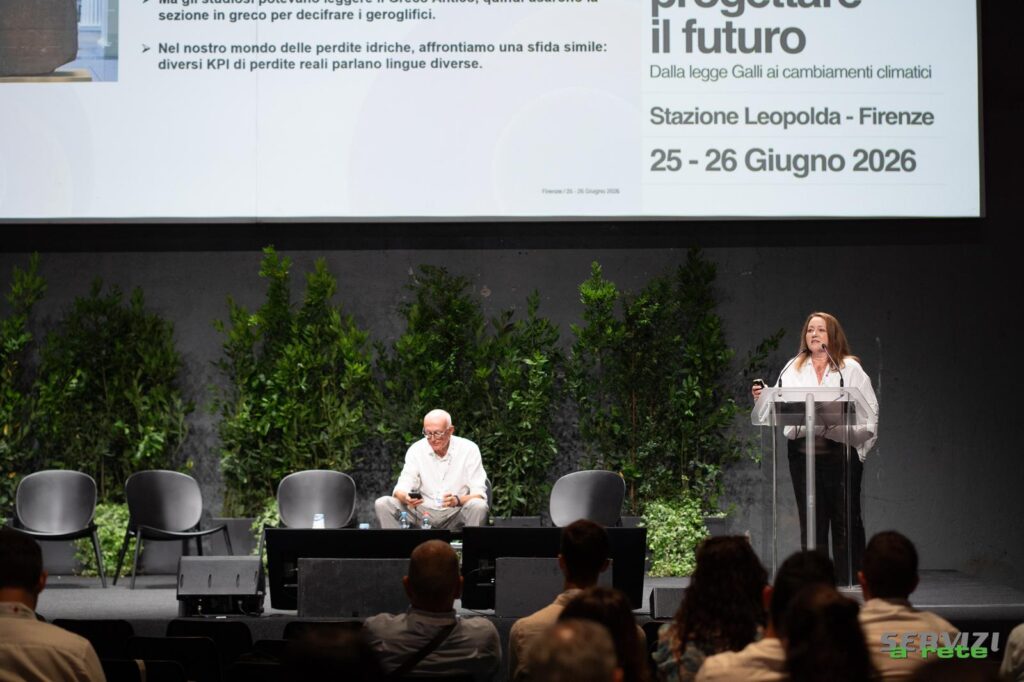
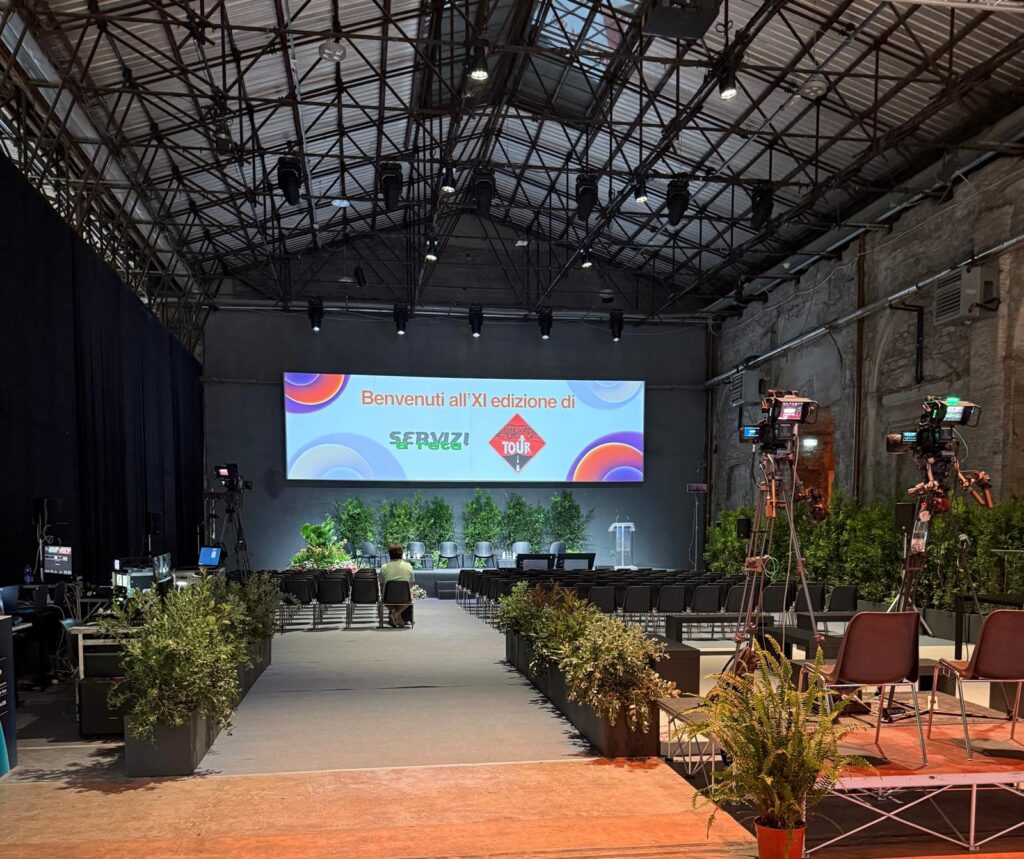
Florence, in June, was a different kind of event entirely. Servizi a Rete TOUR, held at the Stazione Leopolda with Publiacqua as host, is Italy’s national gathering for utilities and infrastructure — broader in scope than Brescia, and squarely focused on reporting PNRR progress and results at a regional and Utility level.
Kate Stanton-Davies presented again on the inter-relationships between real loss KPIs, and there was some great feedback about how important the choice of KPIs is and whether they are fit for purpose.
Severn Trent: the UK lens
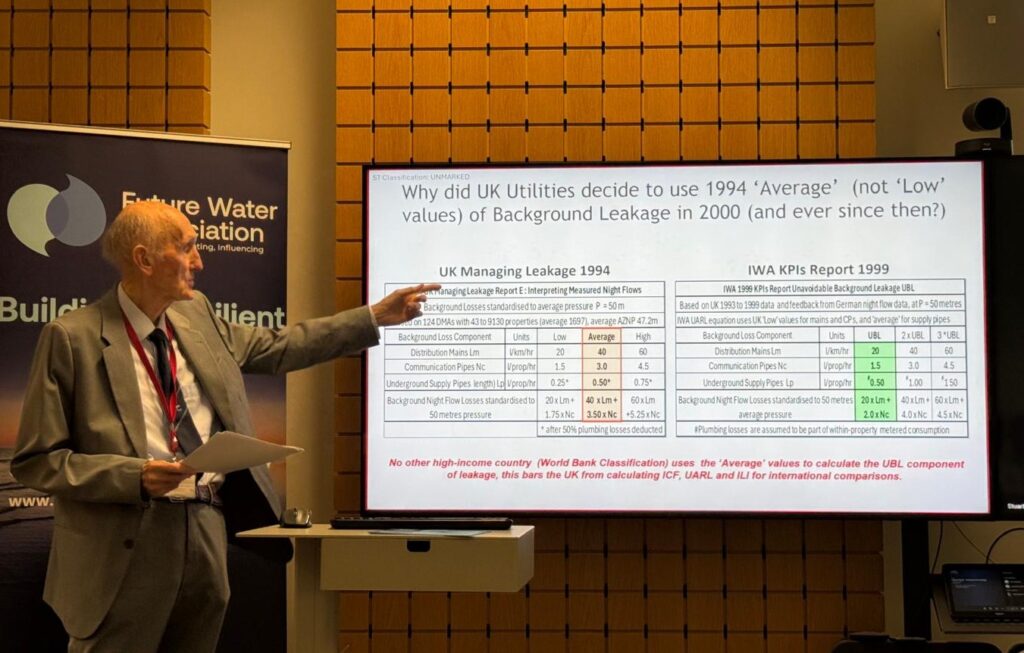
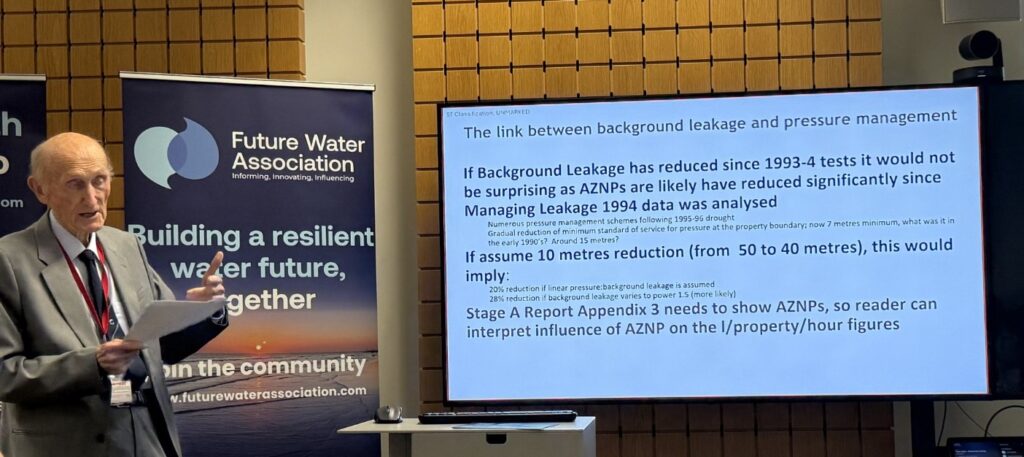
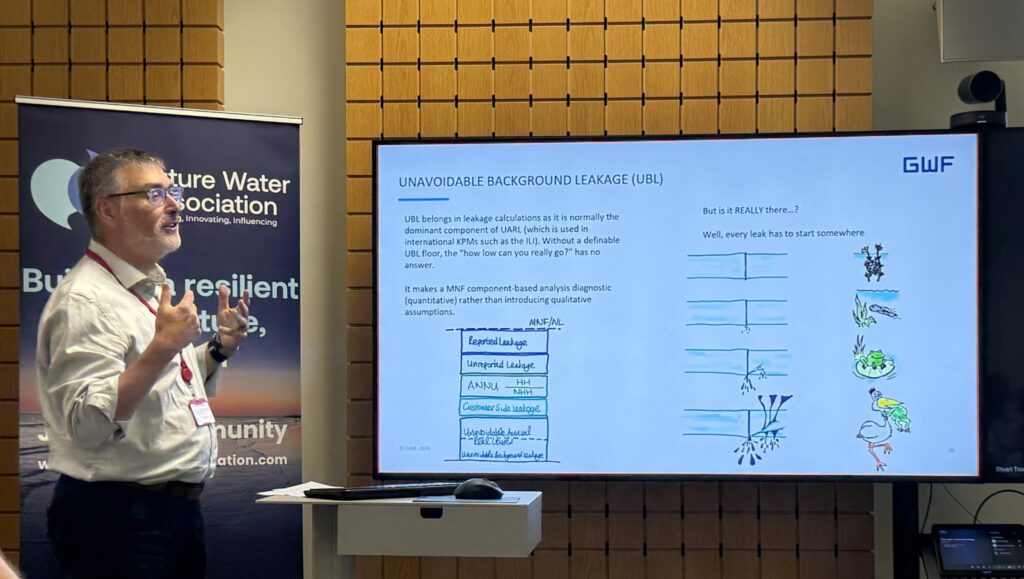
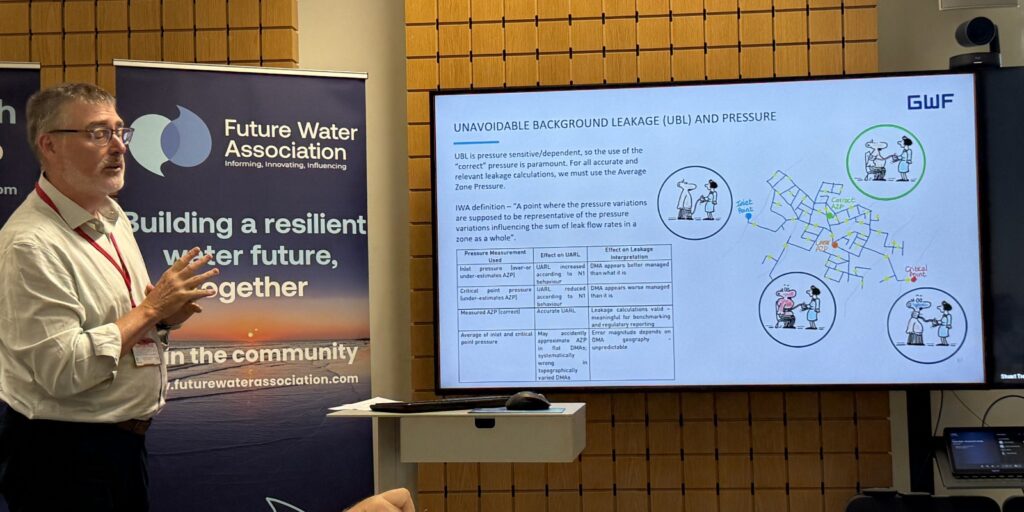
The Leakage and Metering Conference, run by the Future Water Association at Severn Trent in early July, was narrower again — and useful precisely because of that. On Day 1 Allan took part in a panel discussion and mentioned how burst reductions from pressure management have become predictable over the last 20 years. Also, how the values used for unavoidable background leakage in the UK are still higher than the values IWA has used internationally in high-income countries for the past 25 years. It’s a topic that sounds dry — until you consider that assessing background leakage in DMAs depends on interpreting IWA baseline data using measured average zone pressures, density of connections, and customer meter location.
And running underneath all of it, again: digitalisation growing pains, and data validation resurfacing as a live, unresolved issue — not a solved problem utilities have already moved past.
The technologies worth watching
Reflecting back on these events, two very different technology responses to the same underlying problem stood out to us:
Flowless’s WaterCloud platform, described above, is the end-to-end answer: validation, loss component analysis and leak detection, and water balance and KPI reporting, all within one system, with Octopo turning the output into action on top. Timeseer.ai takes the opposite approach, going deep on a single link in that chain — validating the raw sensor and meter data before anything else touches it — on the view that if that first step isn’t trustworthy, nothing built on top of it can be either.
What struck us both, across three very different rooms in two different countries, is that the strongest technologies on show weren’t the ones promising to replace judgement — they were the ones building defensibility into the method itself, carrying uncertainty through every step rather than presenting a single confident number at the end. That’s the same argument WLR&A has been making about KPIs for years, and it was genuinely good to see it showing up in the tooling, rather than just in the conference talks.
Where we land
This doesn’t feel like a single inflection point so much as the same toolkit maturing in a useful direction — from detection-for-its-own-sake towards detection married to defensible, auditable data. If there’s a lesson from Brescia and Florence, it’s the pace and confidence that comes with a large, deadline-driven funding programme like the PNRR — even if replicating that funding model isn’t straightforward. And if there’s a lesson running the other way, is that the UK’s multiple repeated attempts to quantify background leakage and KPIs are still not reconciled with internationally applied IWA approaches and standards, 25 years after the 1st IWA Water Loss Task Force published the IWA Water Balance and the UARL and ILI real loss performance indicators.
Either way, the thread connecting all three events was the same one we keep returning to in our own work: how much current and new technology is truly beneficial without data and concepts you can defend when subject to close inspection.
With our thanks to ISLE Italy, Servizi a Rete TOUR, Publiacqua, Future Water and Severn Trent for hosting excellent events that have generated stimulating conversations and brought together a diverse group of water loss professionals.
Kate Stanton-Davies
Water Loss Research and Analysis Ltd
4th August 2026


Leave a Reply